
Is the In-Person Interview Really Making a Comeback?
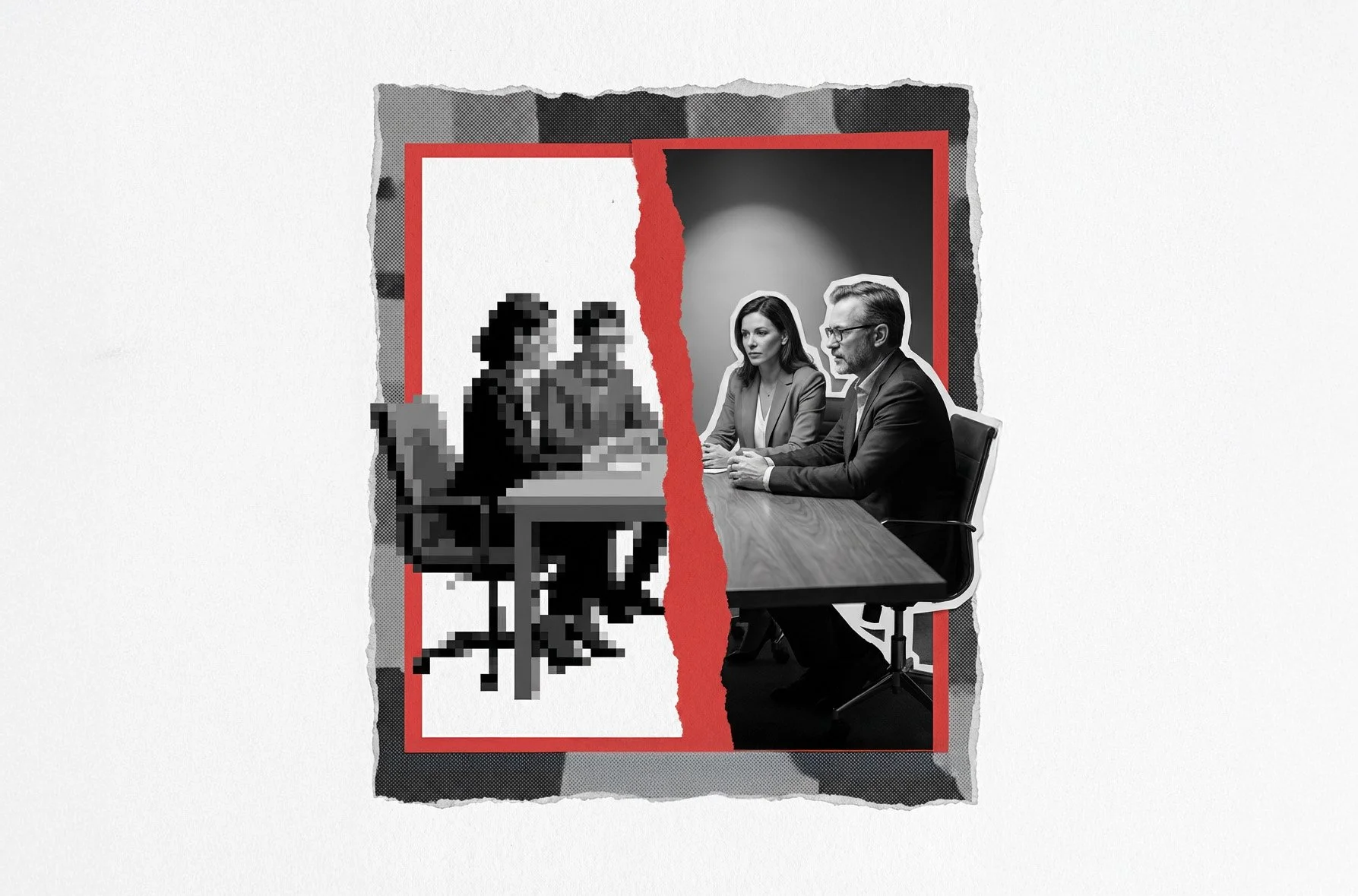
We moved our interviews online. We embraced efficiency. We learned to mute ourselves at the right time. Everything seemed settled.
Then companies started asking something slightly unexpected: “Would you come in?”
Not because meeting face to face is unusual. It is not. But after years of virtual-first hiring, the timing raises a fair question. Why are more teams starting to bring candidates back into the room again?
Why Employers Want One Conversation That Is Completely Unfiltered
Virtual interviewing became standard during the pandemic and remained the default because it solved real problems. It widened access, kept timelines on track, and made the early stages of hiring easier for everyone involved. What it has not solved is how to evaluate a candidate’s natural judgment, adaptability, and communication style without interference.
The Wall Street Journal recently reported that companies including Google, Cisco, and McKinsey have begun restoring in person interviews after encountering situations where virtual performance did not match in-person capability. Leaders are not looking for a production. They are looking for the person who will show up on day one. And some qualities are simply clearer offline.
Employers are realizing that final hiring decisions benefit from a conversation where nothing can run in the background. No assistive prompts. No cleaned-up phrasing. No second screen. Just the candidate, their thinking, and how they handle a real exchange.
Why Virtual Interviews Can Only Show So Much
AI has made interview preparation easier and, in many ways, more accessible. It helps candidates articulate complex experiences and strengthen their clarity. But AI has also introduced an integrity gap that virtual environments cannot always close.
HRD America documented Google reinstating in-person technical interviews after identifying real-time assistance being used during coding evaluations. Axios noted the same trend across industries, as more employers find it difficult to distinguish between refined, algorithm-smoothed responses and genuine, spontaneous reasoning.
This is not happening because candidates lack skill. It is happening because the tools are strong enough to mask gaps that matter. And because virtual formats make it harder to understand how someone reacts when the unexpected happens.
The importance of seeing work in motion varies by role. Technical positions depend on independent problem solving. Client-facing and collaborative roles rely on rapport and adaptability. Leadership roles require presence and clarity. Each of these traits is easier to evaluate in the room.
How Employers Are Redesigning the Final Stage
Organizations are not abandoning virtual interviews. They are using them strategically. Early conversations remain virtual because efficiency matters. Skills-focused conversations are also effective online.
The final step, however, is evolving into something more intentional. Employers want one moment where they can understand how a candidate thinks without the help of structured prompts or elegant phrasing. They want insight that feels real.
This is where the Off-Script Interview is emerging. It is the stage designed to reveal unfiltered communication and natural reasoning. Employers are incorporating scenario based dialogue, collaborative problem solving, and open-ended discussions that show how someone evaluates information, responds to ambiguity, and builds connection. These formats do not test candidates. They reveal how they operate.
How Candidates Can Prepare for the Off-Script Interview
Candidates do not need to perform. They need to participate. Preparing for this part of the process means focusing less on memorized talking points and more on clarity, presence, and genuine engagement.
Successful candidates use the Off-Script Interview to:
Think aloud and walk through decisions
Ask thoughtful questions that show curiosity
Demonstrate how they adapt when the conversation shifts
Let their natural communication style show
Stay grounded when the moment requires originality, not rehearsed answers
This is the part of the process where confidence and authenticity matter more than polish.
Looking Ahead
In-person interviews are not returning because the industry is reversing course. They are returning because hiring is becoming more deliberate. Virtual formats drive efficiency. In-person conversations deliver confidence. And as AI becomes more embedded in preparation and presentation, employers need at least one step in the process that reveals what cannot be replicated or assisted.
The question for hiring teams is no longer whether an in-person step is necessary. The question is how effectively their Off-Script Interview captures the qualities that will matter once the work begins.
Sources
HRD America. “Google opts for in person interviews amid surge in AI aided candidates.” August 2025. https://www.hcamag.com/us/specialization/hr-technology/google-opts-for-in-person-interviews-amid-surge-in-ai-aided-candidates/545926
Wall Street Journal. “AI Is Forcing the Return of the In-Person Job Interview.” August 2025.https://www.wsj.com/lifestyle/careers/ai-job-interview-virtual-in-person-305f9fd0
Axios. “Companies embrace in person interviews to dodge the chatbots.” August 2025. https://www.axios.com/2025/08/12/in-person-job-interview-artificial-intelligence
Begin Your Next Step Forward.
The path forward begins with a conversation. Share a bit about your goals and we will reach out to explore what’s possible together.
