

Industry Insights.
Perspectives, analysis, and guidance shaped by the work we do every day across teams, industries, and evolving talent needs.

Why Job Searching During the Holidays Actually Works in Your Favor
Most job seekers pause their search in November and December, assuming hiring has stopped for the year. It hasn't. Here is what's actually happening behind the scenes at companies during the holidays, and why staying active gives you a real advantage.

Law Firms Are Booming in 2026. Here's What That Means for Attorneys.
U.S. law firms are posting double-digit revenue growth and rising demand in 2026, and most large firms are meeting or beating the projections they set for themselves. Here is where that growth is concentrated and what it means for attorneys weighing their next move.
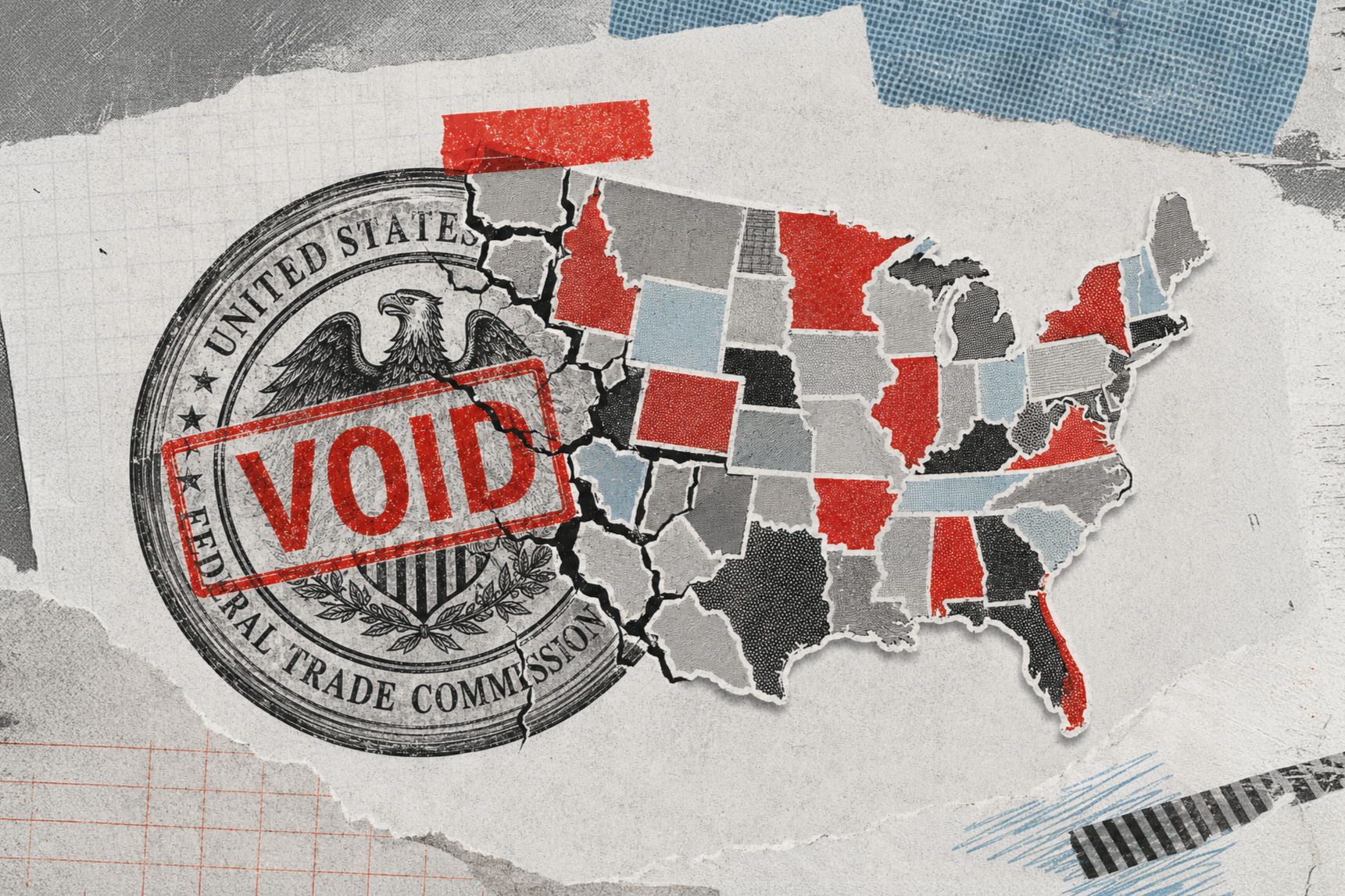
The Non-Compete Ban Died Quietly. Here's What's Left
The FTC tried to ban non-competes nationwide in 2024. Courts struck that rule down, and in February 2026 the FTC formally removed it from the federal code. There is no national ban. What exists instead is fifty different answers depending on where an employee actually works. Here is what that patchwork means if you signed a non-compete, and what it means if your company writes them.

Reference Checks Can Make or Break the Final Offer. Is Your List Ready?
Reference checks happen in the final stage of nearly every senior-level hiring process, with roughly 87 percent of employers checking references before extending an offer and most contacting an average of three per candidate. The people a candidate lists carry real weight in that decision, and a weak or unprepared reference can stall an offer even after a strong interview process. Here is who to list, who to leave off, and how to prepare references before a recruiter ever calls.

Salary Transparency Is No Longer Optional. Is Your Job Posting Ready?
More than a dozen states now require salary ranges in job postings, 65 percent of U.S. employers already operate under some form of pay transparency mandate, and candidates are increasingly filtering out listings that do not include one. Here is what the law requires, what the data shows about candidate behavior, and what employers should know before their next posting goes live.

Why CPA-Required Accounting Roles Are Taking Longer to Fill Than Ever
Over 100,000 U.S. jobs were cut in the name of AI efficiency in the first half of this year alone. The returns companies announced when they made those cuts largely have not materialized, and a growing number of organizations are quietly trying to rehire what they let go.

Law Firm vs In-House Career What You Need to Know
The move from a law firm to an in-house legal department is one of the most consequential career decisions a mid-level attorney will make. The two paths develop different skills, carry different compensation structures, and lead to genuinely different careers. Here is what each one actually looks like.

Bank Succession Planning Beyond the CEO
Most banks have a plan for the CEO seat. The roles that run the institution day to day are a different story. Here is what the data shows about where the real succession gap sits and what the banks closing it are doing differently.

What Happens When Companies Give AI Too Much Control Over Hiring and Job Cuts
Over 100,000 U.S. jobs were cut in the name of AI efficiency in the first half of this year alone. The returns companies announced when they made those cuts largely have not materialized, and a growing number of organizations are quietly trying to rehire what they let go.

Small Business Bankers Are on the Move: Is Your Bank Ready to Hire Them?
Small business bankers are becoming harder to keep, and their client relationships often move with them when they go. Here is what is driving the market and what it takes for a bank to compete for this talent.

Should You Take the Counteroffer? What It Actually Costs You to Stay.
A counteroffer can be flattering and financially tempting, but it rarely solves the reason you started looking in the first place. Before you decide to stay, here is what accepting one can mean for your career trajectory, your standing with your employer, and the decision you were already working toward.

Insurance Professionals Have More Leverage Than They Think
Insurance professionals are harder to replace than most companies are accounting for right now. If you haven't priced yourself against that reality, you're negotiating from the wrong number.

Why Your Next Best Hire Is Already Employed Somewhere Else
Most qualified professionals aren't actively job searching, especially at the senior and executive level. Job postings and applicant tracking systems mainly reach active job seekers, a smaller and more competitive pool. Here is why passive candidates outperform applicants, and what it actually takes to reach them.

Public vs Private Accounting: What Changes When You Make the Switch
Public and private accounting lead to genuinely different careers. The work, the hours, the compensation structure, and the leadership paths diverge in ways that matter more than most people realize before they are deep into one of them. Here is what both actually look like.

Why Companies Cutting Entry-Level Roles May Regret It Later
Most companies treating entry-level hiring cuts as a cost-saving decision are not accounting for what those roles were actually building. The junior hire you pass on today is the senior leader you cannot find in 2030. Here is what the data shows and what the organizations getting this right are doing differently.

The AI Data Center Boom Is Rewriting the Engineering and Construction Job Market
The AI data center buildout is generating more engineering and construction jobs than almost any other force in the current market. Civil engineers, MEP teams, and commercial construction professionals are at the center of it, and the window to get on the right projects is open right now.

Where Construction Pay Is Rising Fastest in 2026
Construction pay isn't rising evenly in 2026. It is concentrating around AI infrastructure, where a massive data center buildout is driving a 32% pay premium for skilled trades. From six-figure electrician salaries in Texas to the talent drain affecting the Sioux Empire, this guide explores why the wage gap is widening and how employers must adjust their recruiting strategy to compete.

Why Hiring Takes So Long in 2026 (And What It's Costing You)
The average time to hire has jumped from 29 days to 48 days since 2023. Even with application volume doubling, completed hires are down 20 percent. This guide explores the 2026 hiring paradox. We look at why organizational indecision and AI noise are stalling your growth and how the best companies are compressing their timelines to land top talent before the competition.

The Real Reason Gen Z Employees Quit
Gen Z confidence in the workplace has plummeted from 59% to 39% in just one year. This isn't just a generational trend—it’s a measurable shift in how early-career professionals view success. From unstructured onboarding to a lack of feedback, discover the real reasons behind the spike in 90 day turnover and how your hiring process can fix it.

How AI Is Changing Legal Hiring in 2026
AI is no longer experimental in the legal field. It is operational. With 70 percent of attorneys using AI weekly, the traditional law firm pyramid model is compressing. From the rise of legal operations specialists to the decline of massive junior associate classes, learn how AI is changing who law firms hire and the specific skills that define the top tier of legal talent in 2026.