What Happens When Companies Give AI Too Much Control Over Hiring and Job Cuts
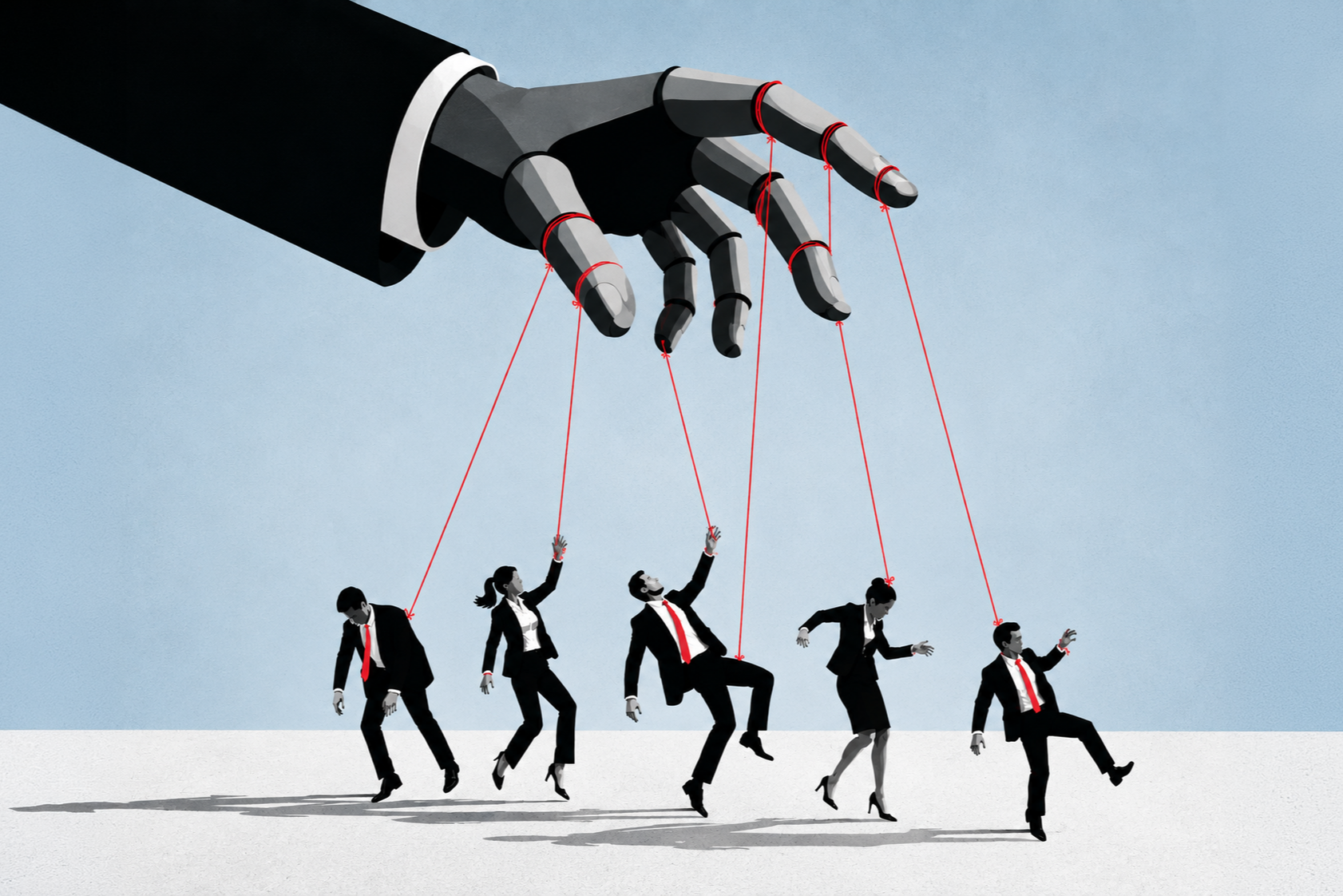
AI has been cited in more than 100,000 U.S. job cuts in the first half of this year, making it the leading stated reason for workforce reductions for multiple consecutive months. A Gartner survey of 350 large enterprises found no correlation between those cuts and improved ROI. Forrester Research found that 55 percent of employers now regret their AI-driven layoffs, and Gartner projects that 50 percent of companies that eliminated customer service and operational roles will be forced to restaff those same functions by 2027. The roles most at risk follow a predictable pattern. The ones that are not are being misjudged at significant cost.
Key Takeaways:
The Scale Is Accelerating: Forbes reporting on layoff tracking data shows AI was the leading stated reason for workforce reductions for multiple consecutive months this year, with more than 100,000 U.S. cuts attributed to AI in the first half of the year, nearly double the full-year total from 2025.
The Returns Are Not Following: A Gartner survey of 350 global executives at large enterprises found that 80 percent reported workforce reductions after deploying AI. Those reductions showed no correlation with improved ROI.
The Rehiring Has Already Begun: Forrester Research found that 55 percent of employers regret their AI-driven layoffs. Gartner projects that 50 percent of companies that cut customer service and operational roles will be forced to restaff those functions by 2027. CNBC reporting confirmed the pattern is already playing out at major organizations.
Which Roles Are Genuinely at Risk: Rules-based, high-volume, repetitive work faces real AI exposure. Roles requiring physical presence, licensed judgment, and client relationships built over time are significantly more durable.
Rehiring Costs More Than the Original Saving: Forrester's 2026 Future of Work report found that one-third of employers who reversed AI layoffs spent more on restaffing than they originally saved, once recruiting, onboarding, and higher salary expectations for returning workers were factored in.
You find out on a Wednesday. Sometimes it is a calendar invite that appears the night before with no context. Sometimes it is a Slack message asking you to join a call. Sometimes you walk into a room and already know from the faces what is happening before anyone says anything. The explanation is usually some version of the same thing: the company is realigning around AI, your role has been impacted, and here is your severance package.
You were not underperforming. Your last review was strong. Nobody had a specific complaint. The role you held for three, five, sometimes ten years was simply reclassified as something a software system could now handle, and the conversation lasted less time than you expected given how long you had been there.
Forbes reporting on layoff data shows that scene played out for more than 100,000 people in the first half of this year alone, in technology companies, financial services firms, and professional services organizations, across different seniority levels, in companies large enough to make the news and small enough that no one wrote about it. The people on the other end of those conversations are still in the market. And some of the companies that let them go are already trying to hire them back.
AI Became the Leading Reason for Layoffs This Year
The acceleration of AI-attributed workforce reductions over the past eighteen months has been significant and is not limited to the technology sector.
AI was cited as the number one stated reason for layoffs for multiple consecutive months in early 2026, per Forbes' analysis of layoff tracking data. The technology sector carries the largest share, with announced tech layoffs up roughly 83 percent year over year through June. But the pattern runs across financial services, professional services, and operations functions in fields where AI was previously assumed to be slow to disrupt.
Companies in technology, financial services, and professional services have publicly tied headcount reductions to AI deployment, citing cost savings and productivity gains as the justification. CNBC's reporting notes that organizations have used AI investment as the stated rationale for decisions that also serve straightforward financial objectives, which makes the pure AI-attribution figures difficult to read at face value. What is clear is that AI has become the dominant public explanation for workforce reductions in fields where it was previously assumed to move slowly, and the scale of those reductions has grown sharply from 2025 to this year.
Which Roles Are Actually at Risk
The pattern of AI displacement follows a consistent logic. It is not determined by job title or education level. It is determined by task structure.
The World Economic Forum's 2025 Future of Jobs Report identifies the roles with highest exposure as those built around rules-based, high-volume, repetitive work. Data entry, customer support scripting, basic financial analysis, routine document generation, and administrative coordination all share a common structure. The input is predictable, the process is defined, and the output is consistent. That combination is where AI performs most reliably, and it is where the highest concentration of eliminated roles has fallen.
Routine coding has followed a similar curve. Microsoft confirmed publicly that roughly 30 percent of company code is now written by AI, a shift that has softened entry-level software engineering positions measurably across the industry.
The roles proving significantly more durable are those where AI handles only a fraction of what makes someone effective at the job. Physical presence, licensed professional judgment, and client relationships built through years of repeated contact cannot be absorbed by a software system. Skilled trades, clinical roles, licensed advisory work, and senior management are all more insulated, not because AI cannot assist in those areas, but because the percentage of the role AI can replicate is not high enough to make elimination the rational decision. As we covered in our breakdown of how AI is reshaping legal hiring, the roles growing fastest in AI-disrupted fields are the ones that require humans to govern, interpret, and work alongside the technology, not the ones AI is replacing wholesale.
The ROI Numbers Tell a Different Story
The efficiency case for AI-driven workforce reductions has been the central justification for most of these decisions. What the data shows about the results is worth examining directly.
In May 2026, Gartner published findings from a survey of 350 global business executives at companies with at least $1 billion in annual revenue, all piloting or deploying AI. Eighty percent of those organizations had reduced headcount. When Gartner looked for a correlation between those reductions and the ROI those companies were generating from AI, there was none. Organizations reporting strong returns from AI investments were cutting at nearly the same rate as organizations reporting modest or negative outcomes. The size of the workforce reduction had no meaningful bearing on the financial results.
Gartner's Helen Poitevin stated it plainly in the official release: workforce reductions may create budget room, but they do not create return. As Fortune reported on the findings, the assumption that cutting headcount and improving AI productivity are naturally linked is not supported by the data.
The organizations reporting the strongest returns were not the ones that cut the most. They were the ones that invested most deliberately in the people who remained, specifically in training, new governance structures, and operational roles designed to guide AI systems rather than simply be displaced by them.
Why the Savings Are Falling Short
The gap between what companies expected and what they got is not random. It traces back to three consistent patterns showing up across organizations that moved quickly.
The first is that AI replaces tasks, not entire jobs. A role that takes forty hours a week may have ten hours of work that AI handles reliably and thirty hours that still require human judgment, client context, and real-time decision-making. Eliminating the role saves the full salary but does not eliminate the thirty hours of work. It redistributes it, often onto people who were not hired to carry it.
The second is that human review requirements were underestimated. AI output in most professional settings still needs to be checked, corrected, and approved by someone who understands the business well enough to catch what the system gets wrong. That oversight function takes time, requires expertise, and in many cases demands more experienced staff than the roles that were eliminated.
The third is institutional knowledge. When experienced employees leave, they take with them an understanding of the business that was never documented because it never needed to be. Client preferences, internal processes, the context behind decisions that do not appear in any system of record. AI cannot reconstruct it. The new hire cannot inherit it. It is simply gone, and organizations are discovering the size of that gap only after it has been created.
What Companies Are Discovering After the Cuts
Forrester Research found that 55 percent of employers now regret their AI-driven layoffs. Gartner has projected that 50 percent of companies that eliminated customer service and operational roles citing AI will be forced to restaff those same functions by 2027, often under different job titles. Forbes reported a pattern that has become consistent enough to have its own name in the industry: the AI boomerang. A company announces AI will handle a function. Staff is reduced. Six to twelve months pass. The AI manages a portion of what the role required. The judgment calls, the client context, and the exceptions that fall outside the system's parameters remain unhandled. The company hires back.
CNBC reporting confirmed the pattern playing out at major organizations, including a large automaker rehiring hundreds of experienced engineers and a major technology company that tripled its entry-level hiring after discovering AI could not handle the judgment-heavy work that remained. Their chief human resources officer stated it plainly: "If we don't continue to invest in entry-level hires, what happens in three to five years? There's no pipeline; the well simply dries up." It is the same argument we made in Why Companies Cutting Entry-Level Roles May Regret It Later, and it is now coming directly from organizations that cut first and are living with the consequences.
The financial reality of reversing these decisions is harder than it looks. Forrester's 2026 Future of Work report found that one-third of employers who went through this cycle spent more on restaffing than they originally saved, once recruiting costs, onboarding time, and the higher salary expectations of returning workers were factored in.
What This Means for the Hiring Market
The cumulative effect of these decisions is reshaping the talent market in ways that are already creating difficulty for the organizations that moved fastest.
The roles proving hardest to backfill are mid-level managers, customer success professionals, and operational specialists who carried cross-functional context and institutional memory that built slowly and disappeared fast. These roles were disproportionately eliminated because they looked, from the outside, like coordination functions that AI could absorb. They were not.
Stanford's 2026 AI Index reported a 17 percent increase in AI-specific governance roles in 2025, a signal that the market is beginning to price human oversight of AI systems as a distinct and valuable skill set. The professionals who can bridge the gap between what AI produces and what a business needs are becoming harder to find, partly because organizations spent the last two years eliminating the adjacent roles that would have produced them.
There is also an employment brand consequence that will play out over years rather than quarters. The person who got that Wednesday call, the one who was not underperforming, whose last review was strong, who had been there for five or ten years, is still in the market. They are talking to recruiters. They are evaluating offers. And they are paying close attention to which employers treat workforce decisions as a long-term commitment and which ones treat them as a quarterly lever. A company that made significant AI-attributed cuts is entering every candidate conversation with that history already in the room, and experienced professionals at every level are factoring it into their decisions about where they want to go next.
Gartner projects that demand for professionals who can guide, govern, and scale AI systems will build significantly by 2028 and 2029. Early evidence suggests the organizations best positioned for that moment are the ones that paired AI investment with deliberate workforce development, rather than those that relied primarily on headcount reduction to demonstrate AI progress.
AI is genuinely changing what work looks like and which roles are needed. What it is not doing is making the people who understand a business, its clients, and its operations less valuable. The organizations that recognized that early are pulling ahead. The ones still working it out are going back to find the same people they let go, in a market where those people now have more options than they did before.
Begin Your Next Step Forward.
Whether your organization is navigating a talent gap from recent restructuring or you are a professional trying to understand where the market is heading, The Agency Recruiting places professionals across banking, accounting, insurance, legal, and construction nationwide. Contact us to talk about what is available right now.